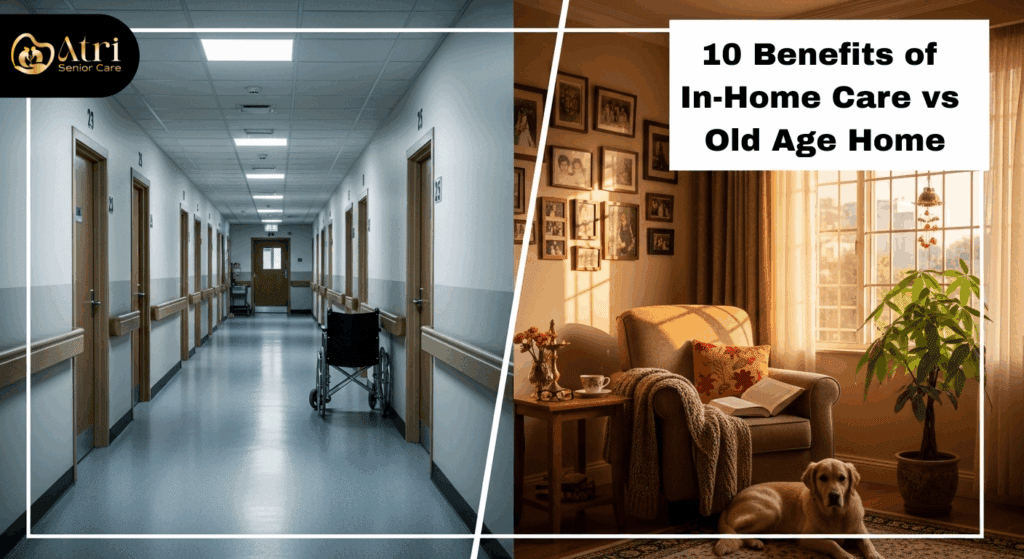
The decision regarding long-term care for an aging loved one is often one of the most significant choices for a family. For many years, traditional Senior citizen homes were often referred to as old age homes or skilled nursing facilities (SNFs),which represented the primary solution for comprehensive senior care support. However, modern elder care models increasingly offer sophisticated alternatives that prioritize the individual’s psychological and emotional well-being at their own homes.
Here a careful analysis of the benefits of in-home care vs old age home reveals an evidence-based comparison, exploring the definitive advantages of receiving professional support within the familiar setting of home.
The Ten Pillars of In-Home Care Advantage
The primary benefits of in home care vs old age home stem from the shift toward a person-centered model, focusing on the continuity of the senior’s established life rather than adapting the individual to a facility’s rigid structure.
1. Comfort of Familiar Surroundings
Most seniors desires aging in place in the sanctuary of their memories, their belongings, and daily patterns. Being in this setting helps alleviate stress, anxiety, and confusion that relocating to aged care facilities tend to trigger in older adults. Being able to receive care in their personal space surrounded by the items of their choice enhances their emotional stability and overall well-being.
This is crucial for seniors who have cognitive impairments, such as dementia and Alzheimer’s. A familiar setting tends to strengthen their remaining abilities and soothe agitated behaviors. Aged care homes require a transition to a new communal setting which can disorient, aggravate, and rob the older adult of their sense of control. Supporting an unaltered environment for the adult is key to the care plan in order to maintain cognitive EU.
2. True Personalization and Control Over Daily Routine
In-home care helps seniors stay in control. They can choose when to wake up, what to wear, and when to eat. This freedom gives them self-direction. Caregivers work one-on-one. They create customized care plans. These plans fit specific health needs and habits. Nursing homes use fixed schedules. This is to manage many residents. They have set meal times and shift-based care. Some people benefit from this structure. However, it can reduce autonomy. It can also hurt a senior’s sense of identity. This is especially true for those who can still manage their own time. In-home care focuses on individualized support. This approach improves dignity.
3. Enhanced Family Integration and Social Connections
Home health services encourage family involvement in care. Families stay connected within the care network when care is at home. This is important for the senior’s emotional health. It also gives family caregivers peace of mind. They receive updates on health and safety. Aging in place lets seniors keep their relationships with neighbors and friends. This supports community ties. Social engagement reduces depression and improves mental health. Institutional settings offer community and social activities. However, these may not replace existing social networks. Home care helps maintain these networks.
4. Lower Risk of Infections & diseases
One of the less obvious but more significant advantages of in home care over old age home is minimizing the exposure to risky germs. Group living homes carry the inherent risk of infection and disease spread because the residents are packed into close proximity with each other. Compared to that, an efficiently run in-home care environment keeps the risks more isolated, particularly when professional caregivers and medical professionals maintain hygiene standards. For elderly recovering from surgery or illness, the familiar, restrictive environment can potentially decrease risks of re-infection or complications.
5. Maintenance of Identity and Treasured Belongings
The emotional side of a person can still be cared for. Clients will still be able to be in touch with family members during Home Care. Family kisses and hugs will be unhampered. Pets, beloved and priceless things, family members, and family pictures will be close by for visualization and emotional correlation. Being able to personalize a room and being able to decorate a space leads to stronger feelings of independence and higher self-worth and self-satisfaction.
6. Focused One-on-One Caregiver Attention
In Home Care, focused attention is given by a singular and consistent care provider. They determine care by the preferences and needs of the individual. This is different from the care attention Home Care facility providers give to multiple clients. This care facility setup leads to a lower form of care for the clients as care is given in a rotating fashion. Having a consistent central and gaze and provider of attention means the person can form trusting and emotional relations with the provider and gain a sense of comfort.

7. Flexible and Scalable Service Scheduling
Home care provides exceptional flexibility in service scheduling, allowing the individual to receive care based purely on their specific, evolving requirements.Services can be adjusted instantly, ranging from a few hours a week for light housekeeping and companionship to more frequent or complex medical assistance. This personalized approach means that financial resources are directed only toward the care actually used, which offers a key advantage over the fixed, bundled costs associated with institutional residency. This scalability is essential for supporting gradual changes in health status, such as during recovery from a hospital stay.
8. Cost-Effectiveness for Partial or Moderate Needs
A major misconception is that home care is always more expensive than old age homes. In reality, it depends on what level of support is needed. Many providers now offer senior citizen care packages Kolkata that are flexible, transparent, and scalable — from a few hours of daily help to round-the-clock medical supervision.
Unlike old age homes with fixed monthly costs (including lodging, meals, and amenities), in-home care allows families to pay only for the services they need — making it a cost-efficient, customized solution.
9. Privacy and Dignity are Preserved
Everyone deserves personal space — and seniors are no exception. In-home care ensures privacy, comfort, and respect, something that can sometimes be compromised in shared living arrangements at old age homes.
At home, seniors can live by their own routines and preferences, whether it’s resting, watching TV, or praying — without needing to adjust to communal living rules. This comfort has a direct impact on emotional peace and self-respect.
10. Improved Health and Faster Recovery
Numerous studies show that seniors recover faster from illnesses, surgeries, or injuries when cared for at home. The familiar environment, personalized attention, and emotional comfort accelerate healing and improve long-term health outcomes.
With dedicated caregivers ensuring proper medication, nutrition, and mental engagement, seniors maintain not only physical wellness but also a positive outlook on life.
When to Consider Old Age Homes
To remain balanced and trustworthy, it’s important to acknowledge that old age homes may still be suitable in some situations — particularly for seniors with high medical dependency, mobility challenges, or those who thrive in community environments.
However, even then, families can complement this by arranging periodic in-home care during visits or recovery periods to maintain that personal touch.
Making the Right Choice for Your Family
The benefits of in-home care vs old age home clearly favor in-home care for most families, particularly those seeking to balance professional medical care with emotional wellbeing, independence, and quality of life.
However, the decision should always consider:
- Your parent’s specific medical needs and mobility levels
- Family circumstances and support systems
- Financial considerations and long-term planning
- Your parent’s own preferences and wishes
- Availability of quality care providers in your area
Taking the Next Step
If you’re considering in-home care for your aging parents, start by:
- Consulting with geriatric care specialists who can assess your parent’s specific needs
- Researching reputed home care service providers in Kolkata with proven track records
- Requesting detailed information about care packages, caregiver qualifications, and emergency protocols
- Speaking honestly with your parents about their preferences and concerns
- Starting with a trial period to evaluate fit and comfort levels
For Bengali families, the good news is that comprehensive senior citizen care packages in Kolkata have evolved significantly. Professional agencies now offer medical expertise, trained caregivers, emergency protocols, and family coordination—all while allowing your parents to age gracefully in their own homes.
The greatest gift you can give aging parents is the assurance that they’ll be cared for with the same love, respect, and attention to detail that they once gave you—in the comfort of the home where their hearts truly belong.
Looking for trusted, professional in-home care solutions? Atri Senior Care provides comprehensive senior citizen care packages in Kolkata with medically trained caregivers, 24/7 emergency support, and personalized care plans designed around your parents’ unique needs. Because your parents deserve care that feels like family.
